Asbestos Removal in Columbia Heights

Planning a remodel, a heating change or a teardown in Columbia Heights? We arrange asbestos testing, remove what the lab confirms and take care of the state notice and the disposal paperwork, so the rest of your project can go ahead.

In Columbia Heights, the 1950s left behind more of today’s homes than any other decade did, and over 7 in every 10 homes standing now were built before 1980.

Request a free quote
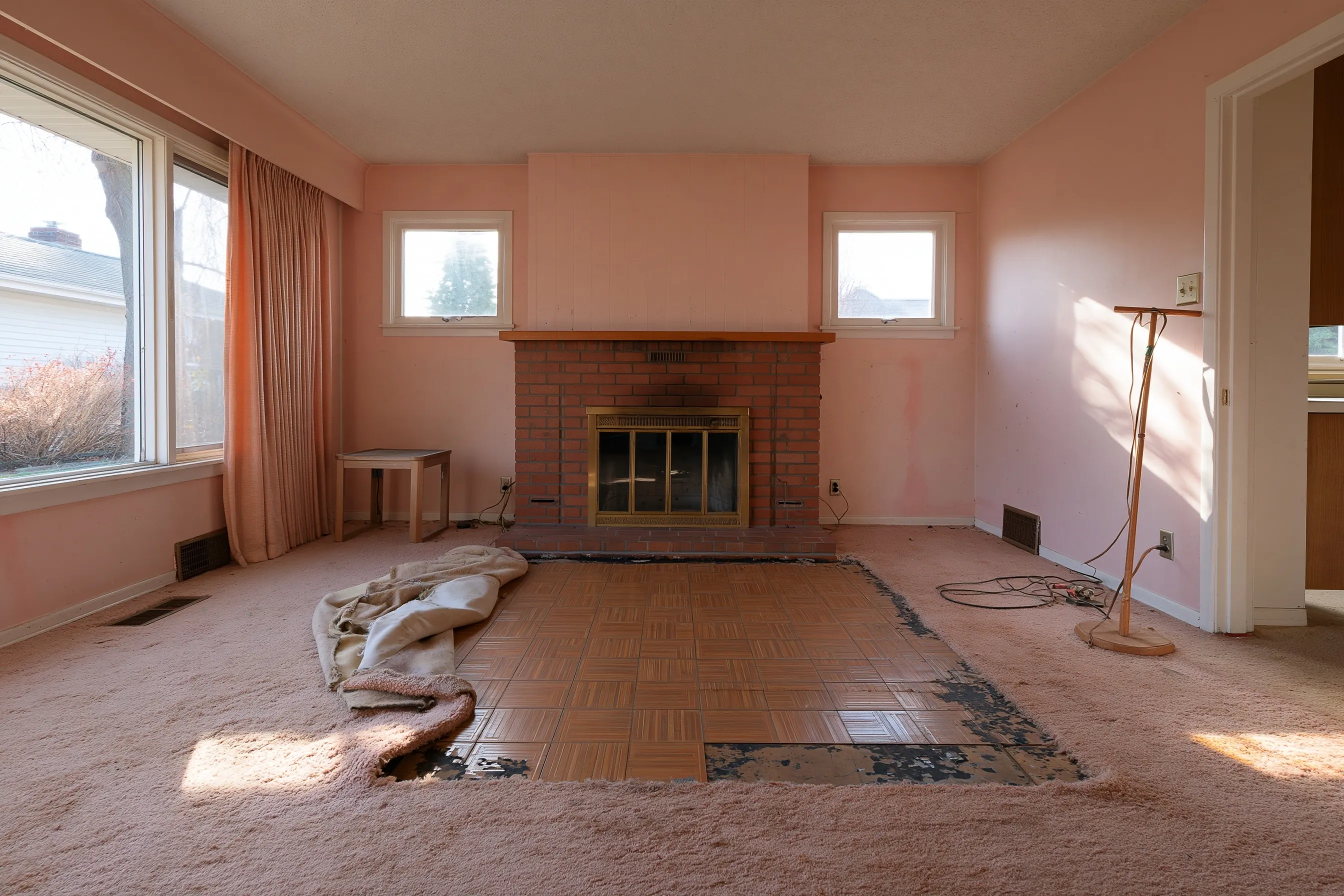
A 1960s living room with the carpet pulled back over 9-inch floor tiles and black adhesive

Asbestos removal services

Testing before you start

An MDH-certified inspector samples what your project will touch. Our asbestos testing page explains remodel sampling and whole-building inspections.

Basement and kitchen floors

Older rooms can hide tile and black adhesive under carpet or newer vinyl. Each layer is sampled, then lifted under floor tile and mastic removal.

Ceilings

A ceiling with texture on it should go to the lab before you relocate a light or remove a wall. When the sample comes back positive, our popcorn ceiling removal page shows what happens next.

Remodels and teardowns

Asbestos has to come out before a building is renovated or demolished. Our remodel and demolition abatement page covers plaster, glazing, siding and roofing.

Columbia Heights housing

The 1950s alone account for more than a quarter of the homes standing in Columbia Heights, and the 1960s add close to another fifth. About 1 in 9 homes dates from 1939 or earlier, and the median home was built in 1963.

Houses from the 1950s and 1960s

Homes from those decades can have floor tile and mastic, ceiling texture, joint compound and taped ducts, all materials on MDH’s list. A house that age can also test clean, which is why sampling comes first.

Owners and renters

Close to 7 in 10 homes here are one-unit homes, and about a third of occupied homes are rented. A rented unit goes through the same testing, notice and removal steps as any other home.

Permits in Columbia Heights

The city’s building permits and inspections page, and the brochures listed there, do not mention asbestos. State rules apply to every job, so ask the city what its own permit needs before you set a demolition date.

Disposal

Asbestos waste is kept wet, sealed in leak-tight containers, labeled and sent with a manifest to a landfill that accepts it.

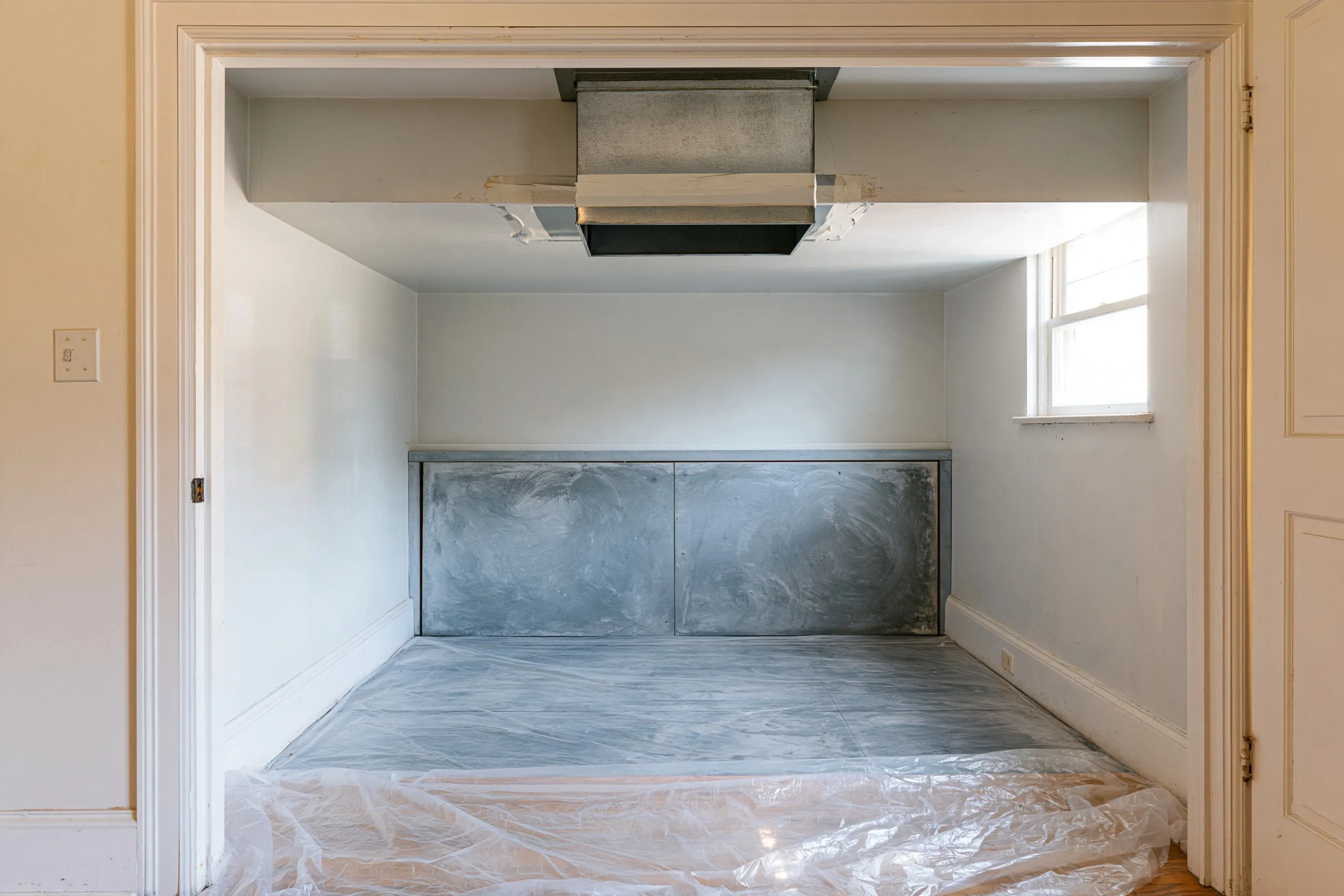
Hall closet with the old furnace removed, a duct collar sealed with old white tape and a gray cement-board panel

Frequently asked questions

Can I remove asbestos myself in Columbia Heights?

When the single-family house is your own home, state law waives the license and the permit fee, although MDH strongly recommends using a licensed contractor. Landlords and owners of duplexes or apartment buildings can’t claim that exemption.

How much asbestos needs a licensed contractor?

In a home, more than 10 linear feet of friable material on pipes, more than 6 square feet on other parts, or, where neither can be measured, more than 1 cubic foot. MDH adds that smaller amounts are not safe just because they are unregulated.

How soon can removal start?

Once the lab results are in, regulated work needs notice to MDH at least five calendar days before it begins. Only a licensed contractor can file it.

Does tearing down a house need an MPCA notice?

A house of four units or less is excluded from MPCA’s demolition notice, unless it was converted from another use, one owner is demolishing several houses, or the job is part of an urban renewal, highway or commercial development project. Buildings of five or more units need the notice ten working days ahead.

In St. Anthony? See asbestos removal in St. Anthony, or visit the home page.

Request a free asbestos removal quote

We recommend calling, but do feel free to contact us using this form. We'll get back to you with a free, personalized quote or additional questions as soon as possible. We're here to help.

Call (952) 299-5776

Call (952) 299-5776